

Best Natural Skin Defense for MMA: 2026 Guide
Editorial TeamTable of Contents
- Why Mat-Borne Skin Infections Are a Constant Threat
- Grappling Skin Infection Prevention: Building a Daily Routine
- The Best Soap for BJJ and MMA: What to Look For
- Hypochlorous Acid for Skin: A Post-Training Option
- Supplements for Skin Health in Athletes: Do They Help?
- When Natural Defenses Aren't Enough: Warning Signs and Medical Care
- Conclusion: Your Skin Defense Starts Before the Mat
- Frequently Asked Questions
Last Updated: October 5, 2026
Why Mat-Borne Skin Infections Are a Constant Threat
Mat-borne skin infections are a constant threat for grapplers because mats, sweat, and skin-to-skin contact create ideal conditions for bacteria and fungi to spread, which is why a natural skin defense matters. This guide from Skin Shield Pro breaks down how to build a natural skin defense for MMA, BJJ, and wrestling.

The problem is simple math: every time you drill, you press your skin against a surface dozens of other athletes touched that day.
Skin hygiene is a training issue, not a vanity one: miss it and you lose weeks on the mat.
Below, we'll show you how to layer natural ingredients, smart washing habits, and internal support so infections stop recurring.
Grappling Skin Infection Prevention: Building a Daily Routine
Grappling skin infection prevention comes down to timing and consistency. Most people focus on soap alone, a mistake, since a complete routine covers body, clothing, and equipment together.
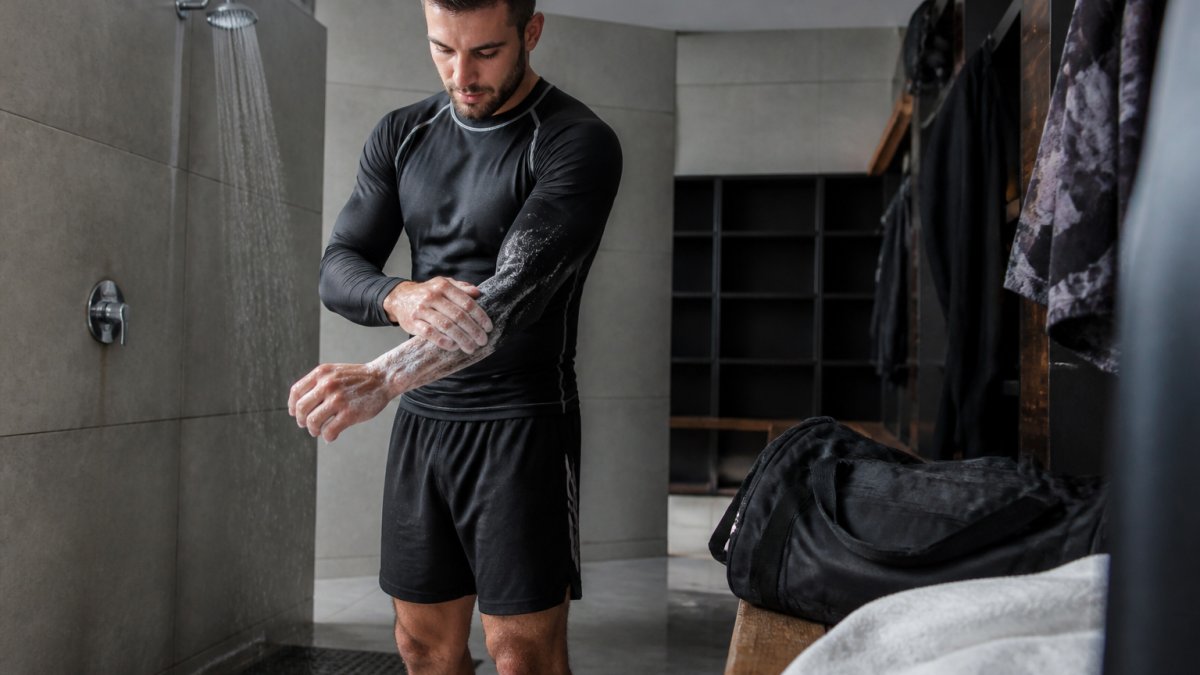
Step 1: Shower Within 30 Minutes of Training
Shower as soon as you can after training. Thirty minutes is the practical target. The longer sweat and bacteria sit on your skin, the more time they have to work into small cuts and abrasions.
- Use lukewarm water, not scalding hot
- Wash your whole body, not just the obvious spots
- Pay attention to armpits, groin, feet, and any mat burn
Step 2: Clean Your Gear, Not Just Your Body
Your rashguard, compression clothing, and belt touch the mat too. If they sit in a gym bag overnight, you're re-exposing your skin next session.
- Wash training clothes after every single session
- Use hot water where the fabric allows
- Dry completely before packing them away
The Best Soap for BJJ and MMA: What to Look For
The best soap for BJJ and MMA is a mild, pH-balanced cleanser that removes sweat, oil, and surface bacteria without stripping your skin barrier. Look for gentle surfactants, moisturizers, and a short ingredient list, not the harshest product on the shelf. Stronger isn't better: harsh cleansers damage the skin barrier, letting bacteria and fungi in more easily and slowing healing of mat burns.
What "Natural" Actually Means on a Label
"Natural" is a marketing term, not a regulatory category for soap. The FDA does not define it for cosmetics and cleansers, so a product can call itself natural while containing synthetic preservatives, fragrance, or surfactants. Two implications:
- Read the ingredient list, not the front of the bottle. The first five ingredients are usually the bulk of the formula.
- "Natural" does not mean "gentle" or "safe." Poison ivy is natural. So is tea tree oil at full strength, which can burn skin.
For a defensible standard, look for third-party certifications (USDA Organic, Leaping Bunny) rather than the word "natural" alone.
Antibacterial Ingredients: What the Evidence Actually Shows
Some natural ingredients have well-documented antimicrobial activity in the lab, not the same as proven infection prevention on human skin during grappling. Keep those claims separate.
- Tea tree oil (Melaleuca alternifolia): Lab studies show activity against staph and some fungi, attributed to terpinen-4-ol. Clinical evidence is strongest for mild acne and some fungal conditions, not for preventing mat-borne staph. Never apply undiluted; typical use is 5-10% in a carrier oil.
- Eucalyptus oil: Contains eucalyptol (1,8-cineole). Antimicrobial in lab tests, but a common irritant and toxic if swallowed. Treat it as a scent, not a defense.
- Neem oil: Traditional antifungal and antibacterial use, with lab activity against some dermatophytes. Human evidence for ringworm prevention is limited.
Natural ingredients can support skin hygiene, but they are not a guarantee against infection and do not treat an active one. For ringworm or suspected staph, soap, natural or otherwise, is not the treatment.
Dilution, Patch Testing, and Irritation Risk
Essential oils are concentrated plant chemicals, not gentle spa products. Two rules prevent most problems:
- Dilute. For leave-on skin use, a common guideline is 1-2% essential oil in a carrier oil for adults, roughly 6-12 drops per ounce. Cleansers that rinse off are lower risk than leave-on oils.
- Patch test. Apply a small amount to your inner forearm, wait 24 hours, and check for redness, itching, or swelling before using it on your face, groin, or any mat burn.
Stop using any product that causes burning, blistering, or a spreading rash, some reactions are allergic contact dermatitis and worsen with repeated exposure.
What to Avoid: Harsh Cleansers and Skin Barrier Damage
Skip anything that leaves your skin tight, red, or stinging.
- Avoid heavy fragrance and drying alcohols (denatured alcohol, SD alcohol) in daily washes
- Avoid harsh antibacterial bars daily, reserve them for targeted use
- Consider SLS-free formulas if your skin is sensitive or you train twice a day
A Simple Selection Checklist
When you compare two cleansers side by side, score them on these:
| Criterion | What Good Looks Like | Why It Matters |
|---|---|---|
| Surfactant base | Gentle, sulfate-free or low-sulfate | Less barrier stripping with daily use |
| Fragrance | Fragrance-free or naturally scented at low levels | Fragrance is a top cause of contact dermatitis |
| Actives | Named ingredients with amounts, not "proprietary blend" | You can't evaluate what isn't disclosed |
| pH | Near skin pH (roughly 4.5-5.5) | Supports the acid mantle that resists microbes |
| Format | Liquid or foaming for body; bar only if kept dry and personal | Bars can harbor bacteria if shared or left wet |
| Cost per use | Reasonable for twice-daily training | A cleanser you skip because it's expensive doesn't protect you |
FDA information on cosmetic labeling and "natural" claims
Hypochlorous Acid for Skin: A Post-Training Option
Hypochlorous acid (HOCl) is a weak acid your immune cells produce to kill microbes. Commercial versions are made by electrolyzing salt water and sold as skin and surface sprays. It is not a natural essential oil or a soap replacement, just an optional add-on to a complete post-training routine.
What It Is and How It Works
HOCl works by oxidizing microbial cell walls and proteins. It is broadly antimicrobial in lab testing, including against staph and some fungi, and generally gentler than bleach- or alcohol-based antiseptics, which is why it shows up in wound-care and dermatology settings.
Two caveats matter for athletes:
- Stability. HOCl loses potency over time and with light and heat exposure. Check the expiration date, store it as directed, and don't keep a bottle in a hot car or gym bag for months.
- Concentration. Products vary widely. Follow the label; more is not better, and some formulations are intended for surfaces, not skin.
Where It Fits in Your Routine (and Where It Doesn't)
Think of your post-training routine in layers, and place HOCl correctly:
- Shower with a mild cleanser, the non-negotiable step that physically removes sweat, oil, and microbes.
- Wash your gear and wipe your equipment, rashguards, belts, headgear, and bags re-expose you if they sit dirty.
- Treat wounds, clean any mat burn or abrasion per standard wound care, and cover it before the next session.
- Optional: HOCl spray, on clean, intact skin after showering and drying, as an extra antimicrobial layer.
What HOCl does not do: it does not replace soap, launder your rashguard, clean mats, or treat an active infection. Spraying it over a suspected ringworm patch or spreading staph lesion invites a longer layoff and a gym outbreak.
Natural Versus Conventional: An Honest Comparison
"Natural" and "conventional" are not the same axis as "gentle" and "harsh." Here's how common options compare for post-training skin care:
| Option | Type | Strengths | Limits |
|---|---|---|---|
| Mild pH-balanced cleanser | Conventional or natural | Removes sweat and oil; low irritation | Not a disinfectant; no residual activity |
| Tea tree or neem cleanser | Natural | Mild antimicrobial activity; pleasant for some skin | Irritation and allergy risk; evidence for infection prevention is limited |
| Chlorhexidine wash | Conventional | Strong evidence for skin antisepsis | Drying; not for daily whole-body use |
| Hypochlorous acid spray | Neither strictly natural nor a drug | Broad antimicrobial activity, low irritation | Short shelf life; not a substitute for washing |
| Prescription antifungal or antibiotic | Conventional, clinician-directed | Treats active infection | Requires a clinician; not for prevention |
The takeaway: soap supports hygiene, HOCl adds a modest antimicrobial layer, and only clinician-directed treatment resolves an active infection. No natural product substitutes for hygiene or medical care.
Safety and Practical Use
- Patch-test first if your skin is sensitive or you have eczema.
- Don't spray into open wounds, eyes, or mucous membranes.
- Don't mix HOCl with other cleaners or store it in unlabeled containers.
If you're prone to irritation or you've had a recent infection, ask a dermatologist before adding a new product to your routine.
Supplements for Skin Health in Athletes: Do They Help?
Supplements for skin health in athletes support your immune system from the inside, which matters because skin infections take hold when your defenses are run down.
That's the gap Skin Shield Pro was built to fill. It's a once-daily formula with eight active compounds, made in the USA and GMP certified. Developed by a 10th Planet Black Belt and a nutrition scientist, it supports gut and immune health so your skin has a stronger first response.
How to Evaluate Immune Support Products
Use these criteria before you spend money on any supplement:
| What to Check | Why It Matters | Red Flag |
|---|---|---|
| Certification | Confirms quality standards | No GMP or third-party testing |
| Ingredient list | Shows what's actually inside | "Proprietary blend" with no amounts |
| Serving plan | Affects whether you'll stick with it | Four pills, three times a day |
| Refund policy | Limits your risk | No returns accepted |
| Who made it | Signals real sport knowledge | No named formulator |
When Natural Defenses Aren't Enough: Warning Signs and Medical Care
Natural defenses aren't enough when an infection is already active. See a doctor if you notice spreading redness, pus, fever, or a rash that keeps growing after a few days.
Watch for these signs:
- A ring-shaped rash that expands
- Redness spreading fast or feeling hot
- Pus, drainage, or a foul smell
Staph can turn serious quickly, and ringworm usually needs antifungal treatment. Neither clears up from soap alone, and training through it spreads it to your partners. Don't self-treat a suspected infection with natural products, get it looked at, follow the treatment plan, and stay off the mat until a doctor clears you.
Conclusion: Your Skin Defense Starts Before the Mat
The athletes who train year-round aren't lucky. They built a routine before they needed one: shower fast, wash their gear, choose a gentle cleanser, and support their immune system daily.
Skin Shield Pro is built for exactly that last layer. It combines eight active compounds in a once-daily formula, made in the USA and GMP certified, to help fortify your immune system against mat-borne bacteria and fungi.
Frequently Asked Questions
What is the best natural skin defense for MMA?
There is no single best product, but a layered approach works best. Shower within 30 minutes of training using a mild cleanser, wash your rashguard and gear after every session, and try a daily supplement with ingredients like neem oil, wild oregano oil, or eucalyptus oil. These natural ingredients may support your skin barrier and immune system, but they do not replace prompt hygiene or medical care when an infection appears.
Can natural soap help prevent skin infections in grapplers?
Yes, natural soap can help remove bacteria and fungi from your skin after training, especially when used within 30 minutes. Look for soaps with tea tree oil, neem oil, or eucalyptus oil, which have antibacterial and antifungal properties. However, soap alone does not guarantee protection. You also need to clean your gear, cover cuts and mat burns, and avoid sharing towels or razors.
Are supplements effective for preventing skin infections in athletes?
Supplements can support your immune system and skin health, but they are not a cure or a guarantee. Ingredients like wild oregano oil and neem oil have shown antimicrobial activity in some studies, though evidence quality varies. A daily supplement like Skin Shield Pro, which contains eight active compounds, is designed to help your body defend against mat-borne bacteria and fungi. Use it as part of a complete prevention routine, not as a standalone fix.
Is hypochlorous acid safe for skin?
Hypochlorous acid is generally well tolerated when used as a post-training spray or cleanser. It is a weak acid that your immune system produces naturally to fight microbes. For most people, it does not sting or dry out the skin. If you have sensitive skin or a known allergy, test it on a small area first. Do not use it on open wounds without consulting a healthcare professional.
Your skin defense starts before you step on the mat, not after an infection shows up. Skin Shield Pro is a once-daily supplement designed for grapplers, with eight active compounds, GMP certification, and a 30-day money-back guarantee. Get started with Skin Shield Pro and spend more weeks training and fewer sidelined.