

How to Prevent Ringworm in BJJ: 7 Essential Steps
Editorial TeamTable of Contents
- Understanding Ringworm and How It Spreads in Combat Sports
- Recognizing Ringworm Before It Spreads
- How to Avoid Ringworm at the Gym
- How to Clean BJJ Gear to Prevent Ringworm
- Can You Train BJJ with Ringworm?
- Strengthening Your Immune Defense
- Gym-Wide Prevention and Outbreak Response
- Frequently Asked Questions
Last Updated: October 9, 2026
Understanding Ringworm and How It Spreads in Combat Sports
Ringworm is a fungal infection that thrives in warm, moist environments like wrestling mats and grappling spaces. Despite its name, it has nothing to do with worms, it's caused by a fungus called tinea. For BJJ athletes, understanding how it spreads is the first step to prevent ringworm in BJJ and keep from sidelining your training.
What Ringworm Is
Ringworm (tinea) is a fungal skin infection that creates circular, itchy lesions on the skin. It gets its name from the ring-shaped rash it often produces, though the shape varies by location.
The infection is highly contagious through skin-to-skin contact, you don't need a visible wound to catch it. A small scratch, abrasion, or even healthy skin can become infected. This is why grapplers face such high risk: constant close contact with training partners, often with exposed skin.
Why Grapplers Are at Higher Risk
BJJ, wrestling, and MMA create the perfect storm for fungal infections: a warm environment, heavy sweating, and constant skin-to-skin contact with multiple partners. That combination, moisture, warmth, and close contact, is exactly what tinea needs to spread.
Mats can harbor the fungus for days or weeks. A partner with ringworm trains, leaves the fungus behind, and the next person picks it up.
This is why preventing ringworm in BJJ requires a multi-layered approach: personal hygiene habits, clean gear, and immune support working together, you can't rely on the gym alone.
Recognizing Ringworm Before It Spreads
Early detection stops ringworm from spreading to other parts of your body and to your training partners. Most grapplers catch ringworm on their arms, legs, or torso, the areas most exposed during grappling.
How to Distinguish Ringworm from Other Skin Conditions
Ringworm typically appears as a circular or oval rash with a clear center and raised, red edges. The area often itches intensely, with scaling or flaking skin. However, not all cases look like a perfect ring, some appear as irregular patches.
The key difference between ringworm and other common skin infections:
- Ringworm: Circular or oval shape, clear center, itching, scaling edges
- Staph infection: Pustules or boils, often with pus, usually more painful than itchy
- Eczema: Dry, inflamed patches without a clear ring shape, usually chronic
- Contact dermatitis: Appears where skin touched an irritant, fades when irritant is removed
If you see a suspicious rash, don't wait to see if it goes away. Contact a healthcare provider for a proper diagnosis so you can start treatment immediately and avoid spreading it to training partners.
How to Avoid Ringworm at the Gym
Preventing ringworm in BJJ comes down to three core practices: managing skin contact, maintaining hygiene, and keeping equipment clean. Skip one, and your risk climbs significantly.
Skin-to-Skin Contact During Training
You can't avoid grappling without skin contact, that's the sport. What you can do is minimize exposure to infected skin and reduce the time fungus spends on your body.
Start with a skin check before training. Look at partners' exposed skin for unusual rashes, circular lesions, or red patches, and ask if something looks off.
During training, focus on technique over intensity when recovering from a skin infection or when ringworm is spreading through your gym.
After rolling, get out of your sweaty gi or rashguard as soon as possible.
Showering and Skin Care After Training
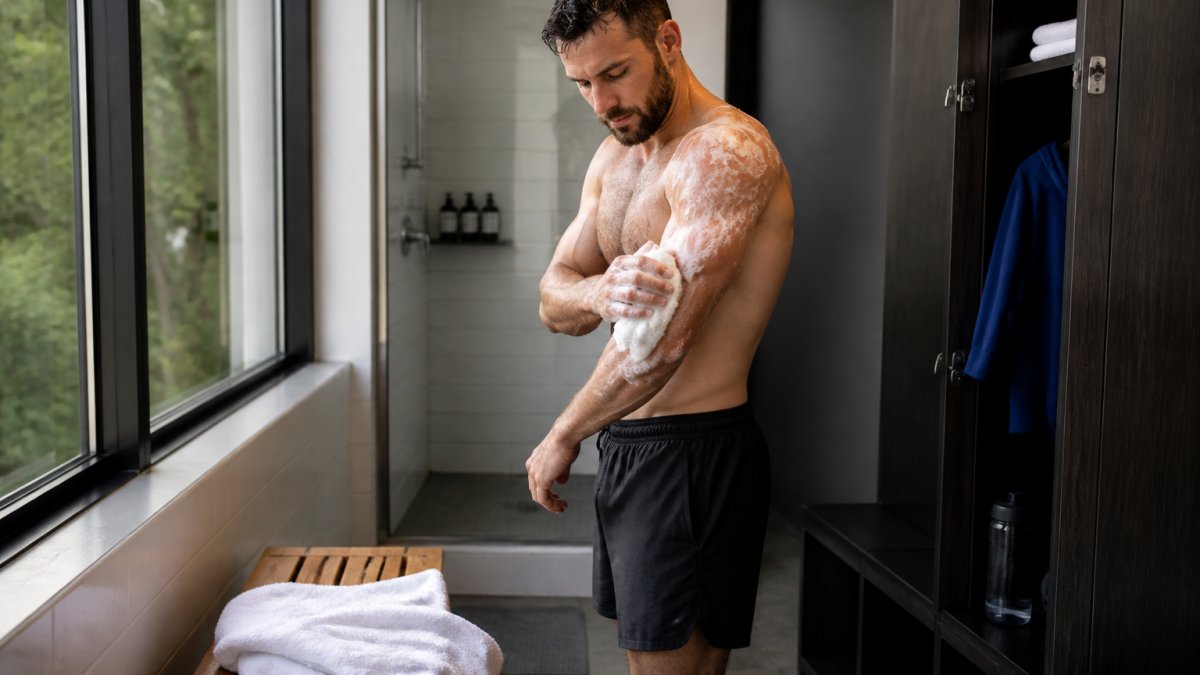
Shower within 30 minutes of finishing training. This is the single most effective habit to prevent ringworm in BJJ.
Use warm water and regular soap, you don't need special antifungal soap for prevention.
After showering, dry your skin completely, especially where moisture lingers: between your toes, under your arms, anywhere skin folds. Leftover moisture creates an environment where fungus can grow.
If you can't shower immediately, wipe down exposed skin with a clean towel to remove surface sweat and reduce fungal load until you can.
Mat and Equipment Hygiene
Mats should be cleaned daily with a solution that kills fungus. If your gym lacks a clear cleaning routine, talk to management about establishing one.
Between classes, avoid sitting directly on mats in street clothes, bring a towel to sit on. After class, don't let sweaty skin contact the mat.
Check the locker room and showers for moisture and mold, damp, poorly ventilated spaces are where ringworm survives longest. Report any buildup. Gyms with good ventilation and regular cleaning have far fewer ringworm cases.
How to Clean BJJ Gear to Prevent Ringworm
Your gi, rashguard, spats, and other training clothes are perfect homes for ringworm if they stay damp. Fungus can survive on fabric for weeks. Proper cleaning and drying are essential.
Washing Your Gi, Rashguard, and Spats
Wash your gear after every training session. Don't let it sit in your gym bag, even for a few hours.
Use hot water when the fabric allows it, it kills fungus more effectively than cold.
Regular detergent is sufficient, no special antifungal detergent needed. Wash with other gym clothes, but keep training gear separate from street clothes to avoid cross-contamination.
If ringworm has appeared in your gym, consider adding a laundry sanitizer to your wash cycle. These kill fungus and bacteria without damaging fabric, use per product instructions.
Drying and Storage
Dry your gear completely before storing it. This is non-negotiable.
Air dry when possible. Hang your gi and rashguard in direct sunlight or in a well-ventilated space. Sunlight naturally kills fungus.
Once dry, store your gear in a clean, dry place. Don't leave it crumpled in your gym bag.
Rotate your training clothes if you train multiple times per week. Having multiple gis means each one gets fully dry before you wear it again.
Can You Train BJJ with Ringworm?
The short answer: no, not until you're cleared by a healthcare provider. Training with ringworm spreads the infection to your partners and risks spreading it to other parts of your own body.
Return-to-Training Criteria
Most healthcare providers recommend staying off the mats until one of these conditions is met:
- You've completed 1-2 weeks of prescribed antifungal treatment with visible improvement
- A healthcare provider confirms the infection is no longer contagious
- The rash has significantly reduced in size and is no longer itchy
Don't guess about when you're safe to return. Ask your healthcare provider directly. Some infections clear faster than others depending on the type of fungus and how quickly you started treatment.
When you do return to training, start with controlled drilling and positional work. Avoid intense rolling for another week or two. Your skin is still healing, and intense training creates micro-tears that could reinfect you or expose your partners.
What to Do After Suspected Exposure
If you suspect you've been exposed to ringworm, maybe a training partner mentioned they had it, or you noticed a suspicious rash on someone you rolled with, don't panic. Exposure doesn't guarantee infection.
Increase your hygiene immediately. Shower within 15 minutes of training instead of 30. Wash your gear more frequently. Check your skin daily for any unusual rashes.
If a rash appears, contact a healthcare provider right away. Early treatment stops the infection from spreading and gets you back on the mats faster.
Strengthening Your Immune Defense
Your body's immune system is your first line of defense against ringworm.
Grapplers who train multiple times per week put significant stress on their bodies.
At Skin Shield Pro, we recognize that preventing ringworm in BJJ requires more than just external hygiene.
Skin Shield Pro contains eight active compounds engineered to support immune function and help your body resist common mat-borne infections.
The cost of prevention through immune support can be a cost-effective alternative to expensive medical treatments for skin infections or missing weeks of training.
Gym-Wide Prevention and Outbreak Response
When one person gets ringworm, your entire gym is at risk. A coordinated gym-wide response prevents a single case from becoming an outbreak.
If ringworm appears in your gym, management should:
- Send a discreet notification to members about increased hygiene protocols
- Increase mat cleaning frequency to daily or twice daily
- Ensure locker rooms and showers are cleaned and dried thoroughly
- Encourage members to shower immediately after training
- Remind everyone to wash gear after every session
Members should:
- Report any suspicious rashes to management immediately
- Stay off mats until cleared by a healthcare provider
- Increase personal hygiene during outbreak periods
- Wash and dry gear more frequently
- Consider additional immune support during high-risk periods
A gym with clear outbreak protocols and member buy-in can contain ringworm quickly. Without coordination, a single infection spreads to dozens of athletes within weeks.
Ringworm doesn't have to derail your training. Your training schedule depends on it. The CDC provides guidance on fungal skin infections for additional medical information, and your healthcare provider can answer specific questions about your individual risk.
| Prevention Method | Timing | Frequency | Impact |
|---|---|---|---|
| Shower after training | Within 30 minutes | Every session | Removes fungal exposure |
| Wash and dry gear | Same day | After each use | Prevents fungus survival on fabric |
| Skin check before rolling | Before training | Every session | Catches infections early |
| Mat cleaning | Daily | Every day | Reduces fungal load on surface |
| Immune support supplement | Daily | Consistent use | Strengthens internal defense |
Mayo Clinic's overview of ringworm symptoms and transmission offers clinical detail on how the infection spreads and what to watch for. American Academy of Dermatology resources on fungal infections provides dermatologist-backed guidance on treatment and prevention for athletes.
Frequently Asked Questions
How long does it take to prevent ringworm in BJJ with proper hygiene and supplements?
Prevention is ongoing, not a one-time event. Consistent hygiene practices, showering within 30 minutes of training, washing gear after every session, and keeping skin dry, reduce infection risk immediately. If you're using an immune-support supplement, allow 2-4 weeks of consistent use for your immune system to build stronger defenses. However, no prevention method is 100% effective; exposure can still occur. The goal is to reduce frequency and severity, not eliminate all risk.
What makes preventing ringworm in BJJ different from preventing it in other sports?
BJJ involves prolonged skin-to-skin contact and close grappling, creating ideal conditions for ringworm transmission. Wrestling and MMA share this risk. Prevention in BJJ requires attention to mat hygiene, frequent gear washing, and post-training showers in ways that individual sports do not. The warm, moist environment of training facilities and the constant abrasion of grappling mean that general gym hygiene alone is insufficient; you need combat-sport-specific practices like rotating training clothes and fully drying all gear before storage.
Can you train BJJ with ringworm, or do you have to sit out?
You should not train BJJ with active ringworm. Ringworm is highly contagious and spreads through skin-to-skin contact. Training while infected risks spreading it to training partners and delaying your own recovery. Most gyms have policies against training with active skin infections. Once you've started antifungal treatment and the lesion shows signs of healing, reduced redness, itching, and size, consult your doctor before returning. Typical medical guidance suggests waiting until the infection is fully cleared, which usually takes 2-4 weeks of treatment.
How should you clean BJJ gear to help prevent ringworm?
Wash your gi, rashguard, spats, and towels in hot water (at least 130°F) after every training session. Use a standard laundry detergent; you don't need specialty antimicrobial products. Dry everything completely before storing, ringworm thrives in damp environments. Hang items in sunlight if possible, as UV exposure has antifungal properties. Store gear in a breathable bag, not a sealed plastic container. Wash your training towel separately from other laundry. Avoid leaving sweaty gear in a gym bag for more than a few hours before washing.