

Proactive vs Reactive Skin Infection Treatment
Editorial TeamTable of Contents
- Understanding Proactive vs Reactive Treatment
- Skin Infection Prevention for Athletes
- Signs of a Skin Infection: Early Recognition
- Skin Infection Treatment: When Symptoms Appear
- Preventing Recurrent Skin Infections
- Why Proactive Strategies Win for Combat Athletes
- Common Mistakes in Skin Infection Management
- Frequently Asked Questions
Last Updated: October 18, 2026
Understanding Proactive vs Reactive Treatment
Proactive treatment means taking preventative steps before a skin infection develops; reactive treatment means addressing one after symptoms appear. The difference shapes how much training time you lose and how severe the infection becomes.
Proactive approaches reduce exposure and protect the skin barrier before you encounter mat-borne bacteria and fungi. Reactive approaches treat visible symptoms like redness, swelling, itching, or warmth after they emerge. Most athletes default to reactive treatment because it feels cheaper upfront, until they miss weeks of training.
What Proactive Treatment Means
Proactive skin infection prevention means consistent pre-symptom actions: immune support, skin barrier maintenance, and environmental controls that reduce pathogen exposure.
The core principle: defend before the threat arrives. For grapplers, that means treating every session as a potential exposure event and building defenses with emollients, rigorous hygiene, and targeted immune support.
Proactive treatment also means recognizing personal risk factors. If you've had ringworm or staph before, your skin is more vulnerable to recurrence, and high-frequency training or regular competition raises exposure.
What Reactive Treatment Means
Reactive treatment begins after symptoms appear: redness, itching, pain, swelling, or warmth. By then the infection is established, and you're fighting back rather than preventing.
Reactive approaches typically involve topical corticosteroids, calcineurin inhibitors, or antimicrobial creams; severe cases need oral antibiotics or antifungals. Meanwhile you're sidelined, watching conditioning decline and your competition schedule slip.
This approach works, but it costs time and training continuity: most athletes face 1-3 weeks of reduced training during active infection, plus 1-2 weeks of cautious return to full intensity.
Skin Infection Prevention for Athletes
Combat athletes face unique infection pressures: constant skin-to-skin contact in a warm, moist environment where bacteria and fungi thrive, plus mat surfaces, shared equipment, and high training frequency. Prevention is a layered system separating exposure control from infection control.
Layer 1: Reduce exposure
Environmental controls include mat cleaning and equipment sanitation. Gyms with low infection rates typically clean mats before and after each class with an EPA-registered disinfectant labeled for the relevant pathogens, and post the schedule visibly. Personal hygiene covers showering immediately after training, changing out of sweaty clothes, avoiding shared towels, razors, or water bottles, and keeping fingernails short, since breaks in the skin barrier are how many bacteria and fungi get in.
Layer 2: Protect the skin barrier
Intact skin is the first defense against infection. Moisturize with a plain emollient, especially if you shower frequently or use harsh soaps, and avoid over-scrubbing or abrasive loofahs on areas of friction. Cover cuts, abrasions, or mat burns with a clean dressing before training, and check your skin after every session.
Layer 3: Prevent infection after exposure
Exposure is not the same as infection. After contact with a potentially contaminated surface or partner, prompt showering with soap and water reduces organisms before they establish infection. Never share topical creams, ointments, or antibiotic products with teammates, even if the rash looks similar: sharing increases the chance of the wrong drug, the wrong duration, and antimicrobial resistance.
Layer 4: Know your personal risk and act early
If you've had ringworm or a staph infection before, your skin may be more vulnerable to recurrence, so treat new symptoms with a lower threshold for evaluation. Many clinicians recommend the 48-hour rule: if a new rash, bump, or area of redness is worsening or spreading after 48 hours, get it evaluated rather than waiting for it to become obvious.
What proactive prevention does not mean
Proactive prevention does not mean taking antibiotics preventively, using leftover prescription creams, or applying steroid creams to prevent infection. Those practices don't prevent infection and can cause harm, including antimicrobial resistance and masked infections. It means reducing exposure, protecting the skin barrier, and responding quickly when symptoms appear.
Signs of a Skin Infection: Early Recognition
Recognizing early symptoms lets you begin treatment immediately, reducing severity and downtime. The faster you respond, the simpler the treatment and the shorter the recovery.
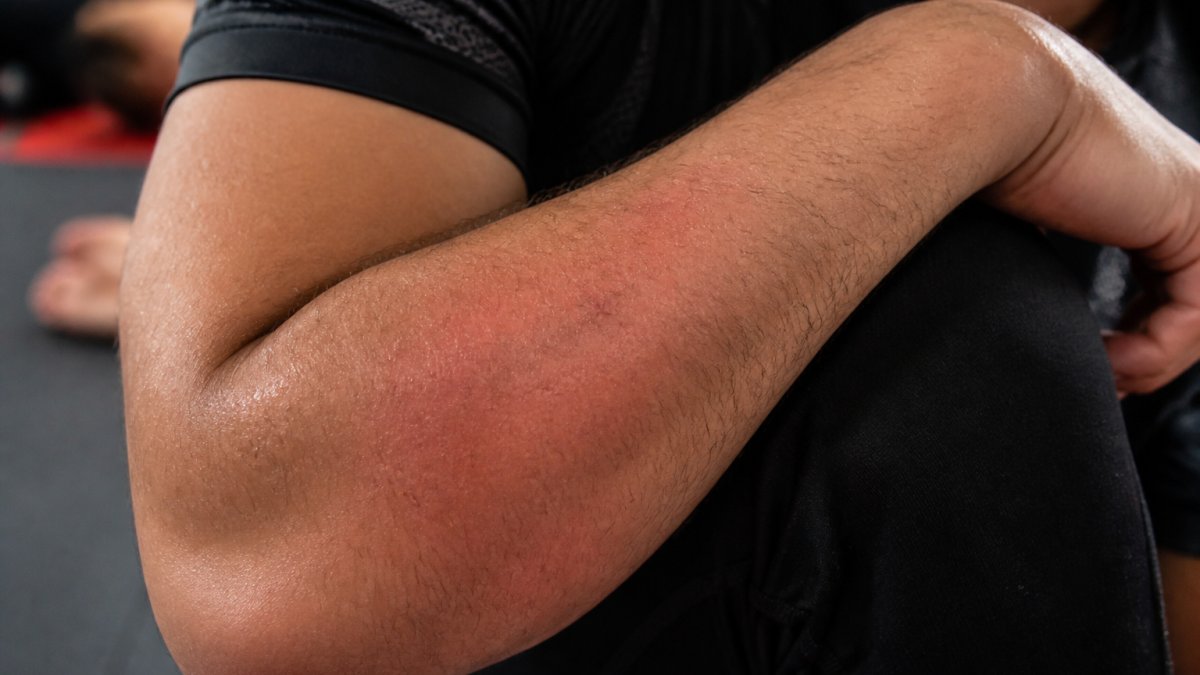
Fungal infections (like ringworm) typically start as circular red patches with raised edges and clearer centers, spreading outward over days.
The critical mistake most athletes make is dismissing early symptoms as minor irritation, blaming mat friction or laundry detergent.
Skin Infection Treatment: When Symptoms Appear
Once you recognize active infection, timing determines outcome severity: starting appropriate treatment within 24-48 hours of symptom recognition resolves faster than waiting a week. But the most important step is the right diagnosis, because bacterial, fungal, and viral infections need completely different medications, and the wrong one can make things worse.
Why infection type changes the treatment
A common and dangerous mistake is assuming every red, itchy patch is the same. Bacterial infections (often staph or strep) need antibacterial therapy; fungal infections (such as ringworm, a dermatophyte) need antifungals; viral infections (such as herpes simplex or molluscum) need antivirals or supportive care, and antibiotics do nothing for them. An antibacterial cream won't clear a fungal infection, and a steroid cream on a bacterial infection can suppress local immunity and let it spread. A swab or scraping, when available, prevents weeks of guessing.
Bacterial infections
Localized bacterial infections, such as impetigo or small folliculitis clusters, are often treated first with topical antibiotics when the area is small and there are no systemic signs; mupirocin and retapamidine are common prescription options. If the infection is spreading, involves deeper tissue, or comes with fever or significant pain, oral antibiotics are typically considered. Never use leftover oral antibiotics: the drug may be wrong for the organism, the dose inadequate, and incomplete courses contribute to antimicrobial resistance.
Fungal infections
Ringworm and other dermatophyte infections usually respond to topical antifungals such as clotrimazole, terbinafine, or miconazole when the patch is limited. Apply for the labeled duration and often a week or two after the rash clears, because the fungus can persist in the skin. Widespread, recurrent, scalp, or nail infections often require oral antifungals prescribed by a clinician. Over-the-counter steroid creams temporarily reduce redness and itching but don't kill the fungus, and they can change the rash's appearance and delay proper treatment.
Viral infections
Viral skin infections are the category athletes most often misidentify. Herpes simplex outbreaks may respond to prescription antivirals started early, and molluscum contagiosum is often managed with supportive care or in-office procedures rather than antibiotics. Because antivirals work best within the first day or two of symptoms, early recognition matters more here than in almost any other infection type.
The training gap and return-to-play
Reactive treatment has a real cost: training time. Most physicians recommend stopping mat contact while the infection is active and potentially contagious. Bacterial infections often allow return after 24-48 hours of appropriate antibiotics and improvement of lesions, depending on the sport and clinician judgment. Fungal infections may allow earlier return if the lesion is covered and early treatment completed, with the gym informed. For herpes, return is typically guided by whether lesions are crusted and whether the athlete is on antiviral therapy.
Preventing Recurrent Skin Infections
Athletes who've experienced one infection face substantially higher recurrence risk.
Recurrence prevention requires sustained commitment to the three-pillar approach: environmental control, personal hygiene, and internal immune support.
Environmental control means consistent mat cleaning and equipment sanitation; partner with your gym to establish protocols if they don't exist.
Overall health rounds out the routine: sleep, nutrition, stress management, and gut health. Skin Shield Pro was developed as a once-daily formula for grapplers to support gut health and normal immune function as part of that routine.
Why Proactive Strategies Win for Combat Athletes
The economics favor proactive approaches. Treatment costs include topical medications, potential oral antibiotics, medical visits, and lost training time; prevention costs are consistent hygiene and targeted supplementation.
More importantly, proactive strategies preserve training continuity: you stay on the mats, conditioning doesn't decline, competition prep stays on schedule, and teammates don't get infected through you.
Proactive treatment also maintains long-term disease control.
Common Mistakes in Skin Infection Management
The first mistake is treating prevention and treatment as equally important.
The second mistake is assuming your gym's hygiene standards match yours. They rarely do.
The third mistake is stopping preventative measures after infection clears.
The fourth mistake is ignoring recovery and overall health. Hygiene and environmental controls come first; sleep, nutrition, and recovery support them.
The fifth mistake is delaying treatment when symptoms appear.
Proactive versus reactive skin infection treatment represents a fundamental choice in how you approach your athletic health.
For grapplers committed to their sport, the choice is clear: build a proactive defense system that keeps you on the mats. Skin Shield Pro's once-daily formula can support gut health and normal immune function alongside that routine.
Frequently Asked Questions
What is the difference between proactive and reactive skin infection treatment?
Proactive care means hygiene practices, barrier care, and overall health habits before problems start. Reactive treatment addresses infections after symptoms appear, typically requiring topical medications or antibiotics. For combat athletes, proactive strategies reduce training downtime and avoid the cost and inconvenience of treating active infections. Reactive treatment becomes necessary when exposure occurs or symptoms develop, but starting with a proactive approach means fewer infections to treat in the first place.
What are the first signs of a skin infection I should watch for?
Early signs include localized redness, warmth, swelling, and itching or pain in a specific area. Bacterial infections may show pus or drainage, while fungal infections often present as spreading patches with defined borders and scaling. Viral infections like herpes may appear as clusters of blisters. If you notice any of these symptoms after training, stop grappling that area and consult a healthcare provider. Early recognition prevents the infection from worsening and spreading to training partners.
How can I prevent skin infections from coming back after treatment?
Preventing recurrent skin infections requires consistent hygiene, proper wound care, and barrier protection. Wash immediately after training with antibacterial soap, keep skin dry, and avoid sharing equipment or towels. Apply moisturizers to maintain skin barrier health, which reduces vulnerability to pathogens. Support your overall health with good sleep and nutrition. Avoid returning to training until the infection fully heals, and use protective coverings during the recovery period. Addressing the root cause, such as mat exposure or compromised skin, helps break the cycle.
Should I keep training if I think I have a skin infection?
No. Training with an active skin infection risks spreading it to training partners and worsening your own condition through sweat, friction, and continued exposure to mat bacteria and fungi. Most skin infections require at least 24-48 hours of treatment before returning to grappling, and some require longer depending on severity. Consult a healthcare provider to confirm the infection type and get clearance before resuming training. This protects both your health and your team's.