

Stop Recurring Ringworm: A Grappler's Prevention Guide
Editorial TeamTable of Contents
- Why Does Ringworm Keep Coming Back
- How Long Does Ringworm Take to Go Away
- Treatment Adherence: Continuing After the Rash Clears
- How to Prevent Ringworm from Spreading
- How to Clean Gym Equipment to Prevent Ringworm
- Distinguishing Treatment Failure from Reinfection
- When to Seek Prescription Treatment or Medical Testing
- Building Long-Term Immunity and Prevention
- Frequently Asked Questions
Last Updated: October 11, 2026
Why Does Ringworm Keep Coming Back
Ringworm is a fungal infection that spreads through skin-to-skin contact or contaminated surfaces. The problem isn't the fungus itself, it's that most people don't treat it long enough or they get reinfected from the same source.
We see this pattern constantly in combat sports. A grappler treats the rash, sees it clear up, stops the antifungal cream, and gets infected again within weeks.
Incomplete Treatment and Early Stopping
The biggest mistake is stopping antifungal treatment too early.
Most people apply antifungal cream for 1-2 weeks after the visible rash disappears. That feels like a win.
The treatment timeline matters more than you think:
- Week 1-2: Visible rash starts to improve
- Week 2-3: Rash appears to clear completely
- Week 3-4: Fungus is still active in deeper skin layers
- Week 4-6: True eradication happens
If you stop at week 2, you're leaving behind active infection. That's why recurring ringworm is so common among grapplers who train frequently and have multiple skin exposures.
The fix is simple: continue treatment for the full recommended duration, even after the rash looks gone. Most over-the-counter antifungal creams require 2-4 weeks of continuous use.
Reinfection from Contaminated Surfaces
Your gym mat, your training gear, your shower floor, these are all potential sources of reinfection.
Ringworm fungus survives on surfaces for weeks. If you treat your skin but don't clean your environment, you're walking back into the same infection source every time you train.
Common reinfection sources in a grappler's life:
- Gym mats that aren't cleaned properly between sessions
- Towels and clothing that touched infected skin
- Shower floors and communal areas
- Your own bedding if you slept on it while infected
The fungus doesn't care if you treated the infection. If it's still on your mat or in your laundry, you'll get infected again. This is where most people fail.
Cross-Contamination from Household Contacts
Living with other people makes reinfection much more likely.
If you share towels, bedding, or shower space with someone who has ringworm (or had it recently), you're at high risk. The fungus spreads through direct contact or contaminated surfaces.
Family members should be checked and treated if necessary. Shared items like towels and bedding need to be washed separately in hot water. This isn't just about your own skin, it's about breaking the reinfection cycle in your home.
How Long Does Ringworm Take to Go Away
Ringworm doesn't disappear overnight. Understanding the timeline helps you know what to expect and when to seek help if something isn't improving.
Timeline for Over-the-Counter Treatment
Most ringworm responds to over-the-counter antifungal creams within 2-4 weeks of consistent treatment (the CDC).
Here's what the typical timeline looks like:
- Days 1-3: Fungus starts to die; itching may actually increase
- Days 4-7: Rash begins to fade; itching decreases
- Week 2: Visible rash mostly clears; skin still has active fungus
- Week 3-4: Complete clearing with continued treatment
The key word is "consistent." You need to apply the cream exactly as directed, every single day, for the full duration. Skipping days or reducing frequency extends the timeline and increases the chance of incomplete treatment.
When to Expect Symptom Relief vs. Complete Clearance
Symptom relief and complete clearance are two different things.
You'll feel relief from itching within 1-2 weeks. The rash will look much better by week 2 or 3. But looking better doesn't mean the fungus is gone.
Complete clearance, actual eradication of the fungus, takes 4-6 weeks minimum with consistent over-the-counter treatment.
The rule: keep treating for at least 2 weeks after the rash completely disappears. Not until it looks better. Not until the itching stops.
Treatment Adherence: Continuing After the Rash Clears
This section separates grapplers who stay healthy from those who cycle through recurring infections.
Treatment adherence is the single most important factor in preventing recurring ringworm.
Here's what needs to happen:
- Apply antifungal cream exactly as directed on the label
- Apply it to the entire affected area, not just the visible rash
- Continue for the full duration, even after the rash clears
- Don't skip days or reduce frequency
Most people fail at step 4. They treat consistently for 2-3 weeks, see the rash clear, and stop.
Set a phone reminder to apply the cream every day. Put the tube in a visible place.
How to Prevent Ringworm from Spreading
Once you have ringworm, preventing spread to other people and other parts of your body becomes critical.
Personal Hygiene and Skin Care Practices
Ringworm spreads through direct contact and contaminated surfaces. Your personal hygiene directly controls whether it spreads.
Basic practices that actually work:
- Wash your hands after touching the infected area
- Keep the area clean and dry; moisture feeds fungal growth
- Don't scratch the rash; scratching spreads the fungus to other skin
- Wear clean clothes that don't rub the infected area
The dry skin part matters more than most people realize. Ringworm thrives in warm, moist environments. If you keep the area clean and dry, you slow its growth and reduce spread.
Don't wrap the infected area or cover it with occlusive bandages unless a doctor tells you to. That traps moisture and makes the infection worse.
Managing Shared Training Spaces and Equipment
Gyms and training facilities are where most grapplers get ringworm in the first place.
If you have ringworm, you shouldn't train until you've been treating it for at least 1-2 weeks and it's clearly improving.
If you must train while treating ringworm:
- Cover the infected area completely with clothing or a bandage
- Inform your training partners and coaches
- Don't roll with people if the infection is on your hands, arms, or face
- Wipe down any equipment you use immediately after training
Most gyms have policies about training with active skin infections. Check your gym's rules. Some require medical clearance before you can roll again. This protects the whole community.
How to Clean Gym Equipment to Prevent Ringworm
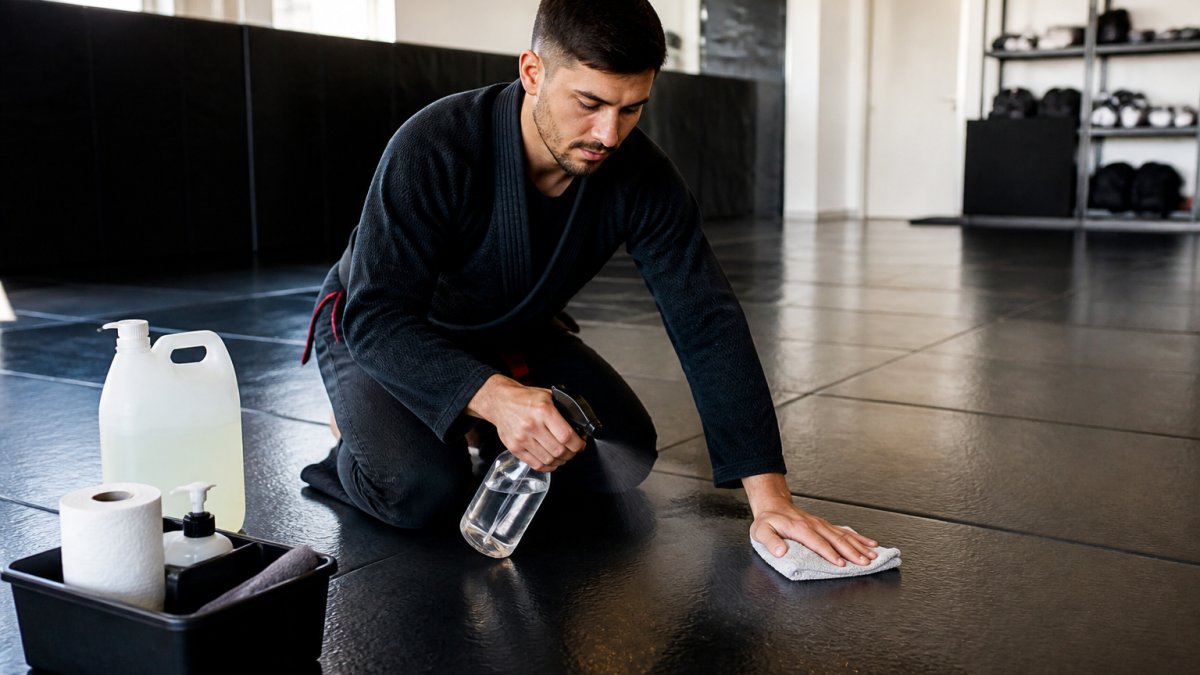
The environment is half the battle. Cleaning gym equipment properly breaks the reinfection cycle.
Effective Cleaning Methods for Mats and Surfaces
Ringworm fungus dies with proper cleaning. You don't need harsh chemicals, you need consistent, thorough cleaning.
Mats should be cleaned:
- After every training session if possible
- At minimum, daily if the gym is busy
- Weekly with a deeper clean using appropriate disinfectant
Effective mat cleaning process:
- Vacuum or sweep the mat to remove debris
- Wipe down with a damp cloth and mild soap
- Use a gym-approved disinfectant spray or solution
- Let it dry completely before the next session
Hard surfaces like benches, rails, and door handles should be wiped down daily with disinfectant. Ringworm fungus can survive on these surfaces for weeks if they're not cleaned.
Don't assume your gym's cleaning routine is sufficient. If you've had ringworm, ask about their cleaning protocol.
Treating Clothing, Towels, and Bedding
Ringworm fungus survives on fabric. Washing your gear properly is essential for preventing reinfection.
Wash all items that touched infected skin:
- Wash in hot water if the fabric allows
- Use regular laundry detergent; heat does most of the work
- Dry in a hot dryer; heat kills the fungus
- If an item can't handle hot water, wash in warm water and dry on high heat
Towels are a major reinfection source. If you used a towel while infected, wash it separately in hot water and dry it on high heat.
Bedding should be washed the same way. If you slept on sheets while infected, wash them in hot water and dry on high heat.
Items that can't be washed (like some wrestling shoes) should be:
- Sprayed with antifungal spray
- Stored in a dry location
- Left unused for 2-3 weeks if possible
- Replaced if they're heavily contaminated
Distinguishing Treatment Failure from Reinfection
Not every recurring rash is ringworm. Sometimes it's something else. Sometimes it's ringworm that didn't respond to treatment.
If the rash isn't improving after 2 weeks of consistent over-the-counter treatment, something is wrong. It could be:
- A different type of fungal infection that needs different treatment
- A bacterial infection (like staph), not fungal
- A different skin condition entirely (like eczema or contact dermatitis)
- Ringworm that's resistant to the cream you're using
The difference matters because the treatment is different. A bacterial infection needs antibiotics, not antifungal cream.
If you're not seeing improvement after 2 weeks, stop guessing and get medical evaluation.
Reinfection looks like the original infection coming back after it cleared. It typically appears in the same location or nearby areas.
When to Seek Prescription Treatment or Medical Testing
Some cases need more than over-the-counter cream.
Seek medical evaluation if:
- The rash doesn't improve after 2 weeks of consistent over-the-counter treatment
- The infection covers a large area of your body
- The infection is on your scalp or nails
- You have signs of secondary bacterial infection (warmth, pus, swelling, increasing redness)
- You're immunocompromised or have other health conditions
A doctor can:
- Confirm the diagnosis through examination or testing
- Prescribe stronger antifungal medications if needed
- Identify if it's a different infection entirely
- Check for complications
- Rule out other conditions that look similar
Prescription antifungal medications (like terbinafine) work faster than over-the-counter creams for some types of ringworm. They're worth considering if over-the-counter treatment isn't working or if the infection is severe.
Building Long-Term Immunity and Prevention
You can't develop immunity to ringworm, but you can build habits that prevent it.
The best prevention is reducing exposure and treating infections quickly if they happen.
Long-term prevention strategy:
- Train at gyms with good cleaning protocols
- Clean your own gear regularly
- Dry your skin thoroughly after showering
- Avoid walking barefoot in communal areas
- Maintain healthy skin with proper hygiene
For grapplers with a history of recurring ringworm, additional support makes sense. Skin Shield Pro is a supplement that fortifies your immune system with compounds that help your body defend against mat-borne fungi and bacteria.
It's not a treatment for active infection. It's prevention. Combined with proper hygiene, equipment cleaning, and treatment adherence, it reduces your overall infection risk and helps you stay on the mats consistently.
Frequently Asked Questions
Why do I keep getting more ringworm spots even after treatment?
Recurring ringworm spots often result from incomplete treatment, reinfection from contaminated surfaces, or cross-contamination from household contacts. If you stop antifungal treatment too early, even after the rash appears to clear, the fungus can survive and spread to new areas. Additionally, ringworm spreads easily through skin-to-skin contact, infected towels, bedding, and shared gym equipment. Ensure you complete the full treatment course as directed, disinfect all personal items, and wash bedding and clothing in hot water to eliminate lingering fungus.
How can I prevent ringworm from returning after treatment?
Prevention requires a three-part approach: maintain strict hygiene by keeping skin clean and dry, especially between toes and skin folds; disinfect your training environment regularly using appropriate cleaning methods; and avoid barefoot walking in shared spaces like locker rooms and communal showers. Wash towels, sheets, and clothing in hot water after each training session. If you train at a facility, encourage the gym to clean mats with disinfectant solutions regularly. Additionally, inspect household members and pets for signs of infection, as they can reinfect you if left untreated.
How long does ringworm typically take to go away with treatment?
With consistent over-the-counter antifungal treatment, most cases show visible improvement within 2-4 weeks. However, complete eradication often takes 4-8 weeks or longer, depending on the severity and location of the infection. Feet and toenails typically take longer to clear than body ringworm. The critical mistake many people make is stopping treatment too early once the rash begins to fade. Continuing treatment for the full recommended duration, usually 2-4 weeks after the rash disappears, significantly reduces the risk of recurring infection.
What should I do if over-the-counter treatment doesn't clear my ringworm?
If ringworm persists after 4 weeks of consistent over-the-counter antifungal treatment, or if the rash worsens, consult a healthcare provider. They may recommend prescription-strength antifungal creams, oral medications, or fungal testing to confirm the diagnosis and rule out other conditions. Some fungal infections require oral antifungals like terbinafine to achieve complete eradication, particularly if the infection involves the scalp, nails, or large body areas. A healthcare professional can also assess whether reinfection is occurring rather than treatment failure.
Recurring ringworm is frustrating, but it's preventable. The solution isn't complicated: finish your treatment completely, clean your environment, and address reinfection sources. For grapplers who've dealt with this cycle, adding immune support through Skin Shield Pro gives you another layer of defense. Subscribe & Save 15% and stay healthy, stay on the mats, and keep training without interruption.