

7 Ways to Tell Staph From a Spider Bite
Editorial TeamLast Updated: October 26, 2026
Quick Summary
A staph spider bite can look nearly identical at first, but staph usually grows quickly within 24 to 48 hours, feels warm, and fills with pus or forms a boil. Spider bites tend to stabilize or improve after the first day, and two puncture marks are rarely visible. Appearance alone cannot reliably tell them apart, so get an unsure lesion checked.
- Staph symptoms often start as a tender red bump that grows within 24 to 48 hours.
- Pus, boils, and abscesses are the giveaway signs of a staph lesion.
- MRSA red flags include rapid growth over hours, severe pain, fever, or chills.
- Seek emergency care same day for a fever of 100.4°F or higher with a skin lesion.
- Keep the area clean and covered, and never squeeze, pop, or cut it.
Table of Contents
- Why Staph Infections Get Mistaken for Spider Bites
- Staph Infection Symptoms on Skin: What to Look For
- MRSA Skin Infection Symptoms and Red Flags
- What Does a Brown Recluse Bite Look Like?
- Side-by-Side: Staph vs. Spider Bite Symptoms Compared
- When to Seek Care for a Skin Infection
- What to Do While You Wait for Evaluation
- Protecting Your Skin Between Mat Sessions
- Frequently Asked Questions
Why Staph Infections Get Mistaken for Spider Bites
A red, swollen bump shows up on your arm after training. It hurts. It's warm. Your first thought might be a staph spider bite. Most of the time, it isn't.
A staph infection is a bacterial skin infection caused by Staphylococcus aureus, a germ that lives on many people's skin and spreads easily on mats. A spider bite is a reaction to venom. They can look nearly identical in the first day or two, which is exactly why learning how to tell staph from spider bite matters for anyone who trains hard.
Here's the part most guides get wrong: the location gives you a clue. Spider bites usually show up on exposed skin. Staph loves warm, sweaty, chafed areas and any small cut or mat burn.
The Overlap That Causes Confusion
Both start as a red bump. Both can itch or hurt. Both can swell.
That overlap is real, and it's why even clinicians sometimes need a culture to be sure. But the two problems move in different directions over time, and that difference is your best tool.
Staph Infection Symptoms on Skin: What to Look For
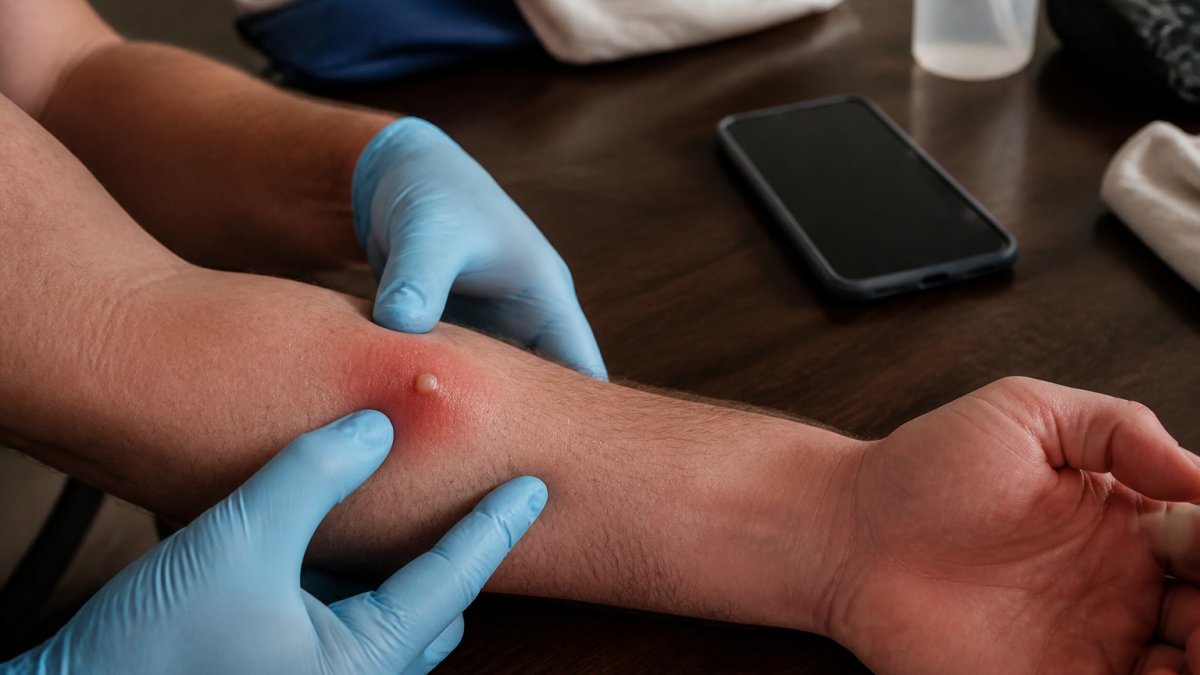
Staph infection symptoms on skin usually start as a tender red bump that grows quickly, often within 24 to 48 hours. The area feels warm to the touch and may drain pus. Many people mistake this for a pimple or a bug bite at first.
Watch for these signs:
- A bump that gets bigger and more painful fast
- Pus or fluid collecting under the skin
- Redness spreading outward from the center
- Tenderness that makes you flinch when touched
- A boil or abscess forming
Pus, Boils, and Abscesses
Pus is the giveaway. A staph lesion often fills with pus and forms an abscess, which is a pocket of infection under the skin. That pocket usually needs a clinician to look at it. Do not squeeze or pop it yourself.
MRSA Skin Infection Symptoms and Red Flags
MRSA skin infection symptoms look like staph at first, but they tend to be more aggressive. MRSA stands for methicillin-resistant Staphylococcus aureus, a strain that resists common antibiotics (the CDC).
Red flags include:
- Rapid growth over hours, not days
- Severe pain out of proportion to the bump's size
- Spreading redness and warmth
- Fever or chills
- A bump that keeps coming back
If you see these, get medical care the same day. This is not a wait-and-see situation.
What Does a Brown Recluse Bite Look Like?
A brown recluse bite often starts as a small red mark that may blister. Over days, the center can turn dark or bluish, and the tissue around it can break down. Some people report a "red-white-blue" pattern of discoloration, though not everyone gets it.
Most brown recluse bites heal on their own with basic wound care. A minority cause deeper tissue damage. That's the honest picture, not the horror-story version.
Geographic Range and Bite Identification
Brown recluse spiders live mostly in the central and southern parts of the country, in quiet, dry spaces like closets and garages. If you live well outside that range, a brown recluse bite is unlikely. Bite identification is tricky because the spider is rarely seen, and many "spider bites" turn out to be a staph spider bite or minor irritation.
Side-by-Side: Staph vs. Spider Bite Symptoms Compared
The fastest way to sort this out is to compare how each one behaves over time. A staph infection tends to build pressure and pus. A spider bite tends to cause localized irritation that may blister or darken. But the honest truth is that no single feature reliably separates the two, and even clinicians often need to look at the lesion in person or test drainage to be sure.
| Feature | Staph Infection | Spider Bite |
|---|---|---|
| How it starts | Tender red bump, often near a cut, scrape, or mat burn | Small red mark, may sting or be painless at first |
| Speed of onset | Grows noticeably in 24-48 hours | Develops over hours to days; most reactions peak early |
| Center | Fills with pus; may form a boil or abscess | May blister, turn bluish, or develop a dark center over days |
| Warmth | Warm to the touch, often spreading | Mildly warm at the site |
| Pain | Increasing tenderness; may throb | Sharp at first, then eases; deep pain is uncommon unless tissue damage occurs |
| Pattern | Single boil or abscess, sometimes clustered | Single lesion; two puncture marks are rarely visible |
| Progression | Redness spreads outward; pus collects; fever possible | Most heal on their own; a minority develop deeper tissue damage |
| Likely location | Warm, sweaty, chafed areas; any small skin break | Exposed skin; brown recluse bites are unlikely outside its central and southern range |
Use this as a guide, not a diagnosis. A common pattern is that a staph lesion gets more painful and more swollen day by day, while most spider bites stabilize or improve after the first day. But appearance alone cannot reliably tell a bite from an abscess or MRSA. Clinicians assess the lesion's location, tenderness, and drainage, and they may culture pus or fluid to identify the bacteria. If you are unsure, get it checked rather than guessing."
When to Seek Care for a Skin Infection
Get seen quickly if you have spreading redness, a fever, severe pain, or a bump that keeps growing. Those signs point to a bacterial infection that may need drainage or antibiotics. But not every lesion needs the same urgency, so use this practical triage guide.
Seek emergency care the same day if you have:
- A fever of 100.4°F or higher with a skin lesion
- Redness spreading rapidly (within hours) or streaks running from the lesion
- Severe pain out of proportion to the size of the bump
- Signs of systemic illness: chills, nausea, dizziness, confusion, or rapid breathing
- A lesion on the face, hands, or over a joint that is worsening quickly
See a clinician within 24 hours if you have:
- A bump that is growing and increasingly tender
- Pus or fluid collecting under the skin
- A boil or abscess forming
- A lesion that keeps coming back after previous treatment
Monitor at home and follow up if worse if you have:
- A small, stable red mark without spreading redness or fever
- Mild itching or discomfort that is not worsening
For a deeper look at how early action changes outcomes, read our breakdown of proactive vs reactive skin infection treatment. The short version: catching it early is easier than treating it late.
While you wait for evaluation, keep the area clean and covered. Don't squeeze, pop, or cut it. Wash your hands after touching it. Skip training until a clinician clears you. Take a photo each day to document changes in size, color, and drainage, which helps a clinician assess progression. Do not start leftover antibiotics or apply home remedies to the lesion; treatment depends on the diagnosis and severity, and antibiotics are not appropriate for every lesion or bite.
What to Do While You Wait for Evaluation
Keep the area clean and covered. Don't squeeze it. Wash your hands after touching it. Skip training until a clinician clears you.
While you wait, you can support your skin's natural defenses. Our guide to natural ways to boost skin immunity walks through practical daily steps. If you're considering supplements, our supplements for skin health in athletes guide covers what to look for.
Protecting Your Skin Between Mat Sessions
Prevention beats treatment every time. Shower right after training. Wash your gear and gi. Cover cuts before you step on the mat. Don't share towels or razors.
For a full routine, our guide to preventing skin infections in combat sports lays out the habits that keep grapplers healthy. This is where Skin Shield Pro fits in. Our once-daily formula combines eight active compounds to help fortify your immune system from the inside out. It's GMP Certified and made in the USA, built specifically for athletes who train on mats.
You can also check guidance from the CDC on staph and MRSA for basic prevention steps.
Frequently Asked Questions
Can a staph infection look like a spider bite?
Yes, and it happens often. A staph skin infection can start as a red, tender bump that looks like a bite, especially in the first day or two. The difference shows up as it progresses: staph lesions tend to grow, become warm to the touch, and develop pus or drainage, while most spider bites stay localized and improve. If a bump is getting worse after 48 hours rather than better, get it checked by a clinician.
What are the four signs of MRSA?
Clinicians commonly look for four signs when MRSA skin infection symptoms are suspected: redness that spreads beyond the original bump, swelling and warmth around the area, pus or drainage from the lesion, and pain that is worse than the size of the bump suggests. Fever or feeling generally unwell can also appear. MRSA is contagious, so cover any draining wound and avoid sharing towels, razors, or gear until a clinician evaluates it.
What does a brown recluse bite look like compared with staph?
A brown recluse bite often shows a small central blister or a pale blue center with a red ring around it, sometimes called a red-white-blue sign, and it may be painless at first before becoming sore. Staph lesions more often have pus, a boil-like shape, and steady tenderness. Brown recluse spiders live mainly in the south-central states, so geography matters. Any lesion with spreading redness or tissue damage needs prompt clinical evaluation.
When should you see a doctor for a suspected spider bite or skin infection?
Seek care the same day if redness is spreading quickly, the area is hot and very painful, you see pus or drainage, or you have a fever. Emergency warning signs include red streaks running from the lesion, numbness, severe pain out of proportion to the wound, or skin turning dark or blistered. For grapplers, an infected area on the mat also means time off training until a clinician clears you, since staph and MRSA spread through skin contact.
Most skin infections come down to timing. The sooner you recognize the signs, the faster you get back to training. Skin Shield Pro was built for grapplers who want to stay ahead of mat-borne bacteria with a once-daily immune formula. Get started with Skin Shield Pro and spend less time sidelined.
