

What Soap Do Jiu Jitsu Athletes Use to Prevent Infections?
Editorial TeamLast Updated: October 25, 2026
Quick Summary
The best jiu jitsu soap lifts sweat and mat grime without stripping your skin, using plant-derived surfactants with tea tree oil or eucalyptus and glycerin or aloe to prevent cracking. Shower within an hour of your last roll, since contact time matters more than which soap you use.
- Tea tree oil and eucalyptus support cleansing but do not sterilize your skin.
- Shared bar soap is a hygiene non-starter; body wash rinses clean fastest after training.
- Use lukewarm water, not hot, and lather spots people skip like ears and toes.
- Wash rash guards, shorts, and spats after every session, not every other one.
- Patch-test new soap on your forearm for 24 hours before full-body use.
Table of Contents
- What to Look for in Soap for Jiu Jitsu Athletes
- Antibacterial Soap for Grapplers: What It Can and Cannot Do
- Antifungal Soap for Athletes: When It Helps and When It Doesn't
- The Post-Training Shower Routine for BJJ That Actually Works
- How to Prevent Skin Infections in Jiu-Jitsu Beyond Soap
- Sensitive Skin, Allergies, and Cost Per Wash: What Most Guides Skip
- Building Your Full Mat-Defense Plan with Skin Shield Pro
- Frequently Asked Questions
What to Look for in Soap for Jiu Jitsu Athletes
Finding the best jiu jitsu soap starts with one fact: mats are shared surfaces, and skin-to-skin contact is the whole sport. Below, we break down what actually separates a grappling soap from a grocery-store bar, where antibacterial products fall short, and how to build a post-training routine that holds up over a full competition season. (Source: studies on the antimicrobial properties of tea tree oil)
Most skin infections in grappling come from prolonged contact with bacteria and fungi left on mats, not from one unlucky roll. That means your soap should do two jobs: lift grime and sweat out of abrasions, and do it without stripping your skin so badly that it cracks and lets bacteria in.
Ingredients That Actually Matter
Tea tree oil is the most common active in grappling soaps, and for good reason: it has a long history of use in cleansing products aimed at skin flora. Eucalyptus and peppermint show up often too, mostly for the cooling feel after a hard round.
Look at the label for what carries the load:
- Plant-derived surfactants that lift sweat and mat grime without over-drying
- Tea tree oil or eucalyptus for a mild antimicrobial assist
- Glycerin or aloe to keep skin from cracking after repeated showers
African black soap and other natural ingredients get a lot of attention in grappling circles. They can be fine cleansers, but "natural" is not the same as "gentle," and it says nothing about infection prevention.
Bar Soap vs. Body Wash vs. Wipes
Bar soap, body wash, and wipes each solve a different problem. A bar soap travels well in a gym bag and lasts through many showers, but shared bars are a hygiene non-starter and some bars leave skin tight. Body wash lathers faster and rinses clean, which most grapplers prefer after a sweaty session. Body wipes are a stopgap for the drive home, not a replacement for a post-training shower.
| Format | Best For | Main Trade-off |
|---|---|---|
| Bar soap | Gym bag, low cost per wash | Shared bars spread germs |
| Body wash | Fast post-training rinse | Bottles leak in gym bags |
| Body wipes | On-the-go before a shower | Does not replace washing |
Antibacterial Soap for Grapplers: What It Can and Cannot Do
Antibacterial soap for grapplers reduces surface bacteria, but it cannot undo a mat covered in someone else's sweat. Many antibacterial washes rely on harsh actives, and dermatologists have long warned that overuse can irritate skin and disrupt its natural barrier.
A common mistake is scrubbing with the strongest antibacterial product every single session. In practice, this means more irritation, not more protection. Use a mild cleanser for routine washes and save anything stronger for when a clinician recommends it.
Antifungal Soap for Athletes: When It Helps and When It Doesn't
Antifungal soap for athletes helps most as part of a routine, not as a rescue treatment. If you have a history of ringworm, a wash with tea tree oil or similar actives can support daily skin care.
Watch out: assuming a soap is treating an infection delays real care and keeps you on the mats spreading it. Grapplers dealing with repeat outbreaks should read our guide on stopping recurring ringworm before the next flare-up.
The Post-Training Shower Routine for BJJ That Actually Works
The best post-training shower routine for BJJ is fast, thorough, and consistent. Most practitioners find that the window between leaving the mats and getting under the water matters more than which soap they use.
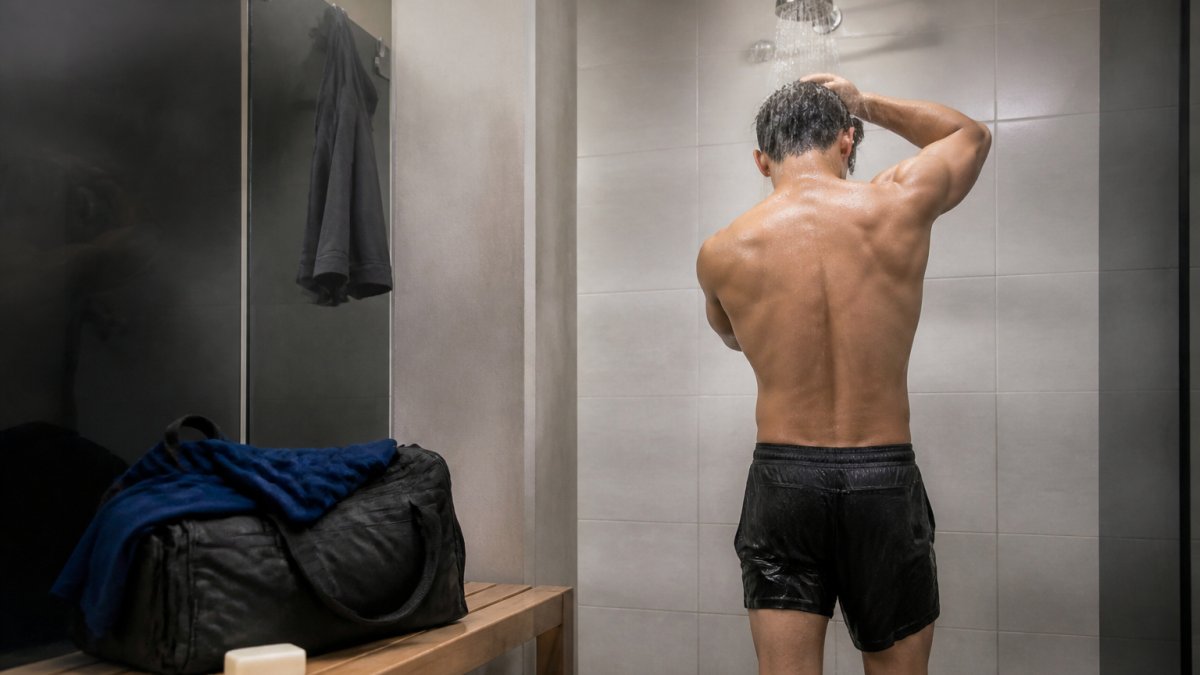
Step 1: Get Off the Mats and Out of Your Gear
Strip out of your rash guard, shorts, and spats before you do anything else. Do not sit in them for the drive home. Sweat-soaked fabric holds bacteria and fungi against your skin, and every extra minute in damp gear is extra contact time. Put the used gear in a separate bag, not in the same compartment as your clean clothes or towel.
Step 2: Shower Within the Hour
Lukewarm water, not hot. Hot water feels good on tired shoulders but strips oils from skin and can leave you itchy and cracked, which is exactly the condition staph and ringworm exploit. Lather everywhere, including the spots people skip: behind the ears, the back of the neck, between the toes, the groin and glute crease, and any skin folds.
Rinse until the water runs clear. Soap residue left on skin can cause irritation, especially in creases.
Step 3: Dry Deliberately
Pat dry with a clean towel, and never share that towel. The drying step is where most grapplers rush. Fungal infections like ringworm and jock itch thrive in warm, moist areas, so dry the ears, armpits, groin, and between the toes completely before you get dressed. If you have a history of athlete's foot or jock itch, use a separate towel for your feet or dry them last.
Step 4: Handle Gear and Bag
Wash your rash guard, shorts, and spats after every session, not every other one. Cold or warm water with regular detergent is enough; the mechanical action of the wash and the drying step do most of the work. Dry gear completely before it goes back in the bag. Wipe down the inside of your gym bag periodically, and never put damp gear in a closed bag for hours.
Step 5: Check Your Skin
After you are dry and dressed, take two minutes to look at your skin, especially in warm, moist areas where ringworm likes to start. Note any new redness, rings, or bumps. Catching a rash early is far easier than clearing it after a week of training.
This is the part most guides get wrong: they treat the shower as the whole defense. It is the anchor, not the whole plan. If you want to know how to act before an infection starts rather than after, our breakdown of proactive vs reactive skin infection treatment is the next read.
How to Prevent Skin Infections in Jiu-Jitsu Beyond Soap
Preventing skin infections in jiu-jitsu goes past soap because most exposure happens before you ever reach the shower. Cover abrasions with a clean bandage before training. Wipe down gym mats if your academy asks students to help.
The single biggest mistake is training through a rash because "it's probably nothing." That is how one infection becomes a gym-wide outbreak. If you are unsure whether you should be on the mats at all, read our guide on whether it is safe to train with ringworm before your next class.
For the full set of mat-side habits, our article on how to prevent ringworm in BJJ walks through seven steps that go well beyond soap.
Sensitive Skin, Allergies, and Cost Per Wash: What Most Guides Skip
Most grappling soap roundups list products and stop there. Two things they almost never cover are the ones that decide whether a soap actually works for you: how your skin reacts to it, and what it costs per clean shower. Both deserve real attention.
Sensitive Skin and Allergies
Fragrance, essential oils, and strong actives can all trigger contact dermatitis, and a rash from a product looks a lot like a rash from the mats.
A few practical rules:
- Patch-test anything new. Apply a small amount to the inside of your forearm, leave it on for a few minutes, rinse, and watch for redness or itching over the next 24 hours before using it on your whole body.
- Read the full ingredient list, not the front label. Tea tree oil and eucalyptus are common allergens. If you have reacted to either before, avoid products that list them, even in small amounts.
- Fragrance-free is not the same as unscented. Unscented products may contain masking fragrances. If your skin is reactive, look for fragrance-free on the label.
Anyone with a known allergy to tea tree oil, eucalyptus, or fragrance should read the full ingredient list before buying, and anyone with a diagnosed skin condition should treat soap as part of a plan set with a clinician, not a substitute for one.
Cost Per Wash
Cost per wash is the other angle most roundups ignore. A large body wash that lathers well can cost less per shower than a small specialty bar, even if the sticker price looks higher.
Here is how to estimate it without guessing:
- Bar soap: a standard bar used daily in the shower typically lasts several weeks for one person. Divide the bar price by the number of showers you expect to get from it.
- Body wash: estimate how many pumps or ounces you use per shower, then divide the bottle price by that number of showers. A bottle that seems expensive can be cheaper per wash than a specialty bar.
- Wipes: count the wipes per pack and divide by the number of uses. Wipes are almost always the most expensive per use, which is fine for a stopgap but not for routine washing.
Value is about how many clean showers a product delivers, not the price on the shelf. A soap that irritates your skin and gets abandoned after a week has an infinite cost per wash.
Building Your Full Mat-Defense Plan with Skin Shield Pro
Soap handles the outside. Your immune system handles the inside, and that is where most grapplers leave a gap.
We are direct about what it is not. It is not a treatment for an active infection, and it does not replace a shower, clean gear, or a doctor's visit.
Readers who want the complete picture, from mat hygiene to recovery habits, should read our complete guide to preventing skin infections in combat sports.
Frequently Asked Questions
What soap do jiu-jitsu athletes use?
Most grapplers use a mild, fragrance-free bar soap or body wash that cleans sweat and mat grime without stripping the skin barrier. Some choose products with tea tree oil or eucalyptus for a fresh feel, but the priority is a thorough wash within 30 minutes of training. Antibacterial and antifungal soaps can help in specific situations, but plain soap and water remains the baseline for most athletes.
Is antibacterial soap better after jiu-jitsu?
Antibacterial soap for grapplers can reduce surface bacteria, but it is not a substitute for prompt showering and clean training gear. Overuse may irritate skin and disrupt the natural barrier, which can increase sensitivity. Use it when you have a known exposure or a cut, and otherwise rely on a gentle cleanser plus thorough rinsing. If you have recurrent infections, talk to a doctor about a prevention plan.
How soon should I shower after jiu-jitsu?
Shower as soon as possible after training, ideally within 30 minutes. The post-training shower routine for BJJ should include a full-body wash with soap, paying attention to folds and any areas that contacted the mat. Dry off completely with a clean towel, put on clean clothes, and wash your gear and belt separately. Delaying a shower gives bacteria and fungi more time to settle on skin.
How do I prevent skin infections from jiu-jitsu?
Preventing skin infections in jiu-jitsu combines hygiene and awareness. Shower promptly, wash gear after every session, keep nails trimmed, and cover cuts with a waterproof dressing. Check your skin daily for new bumps or rings, and do not train on broken or infected skin. A consistent routine plus immune support, like a daily supplement designed for grapplers, can help reduce time off the mats.
The mats do not get cleaner because you hope harder. They get safer when your routine covers every layer: the right cleanser, a fast shower, clean gear, and an immune system that is not running on empty. Skin Shield Pro supports that last layer with a once-daily formula, a 30-day money-back guarantee, and Subscribe & Save 15% for athletes who train year-round. Get started with Skin Shield Pro and build a defense that keeps you on the mats.
